

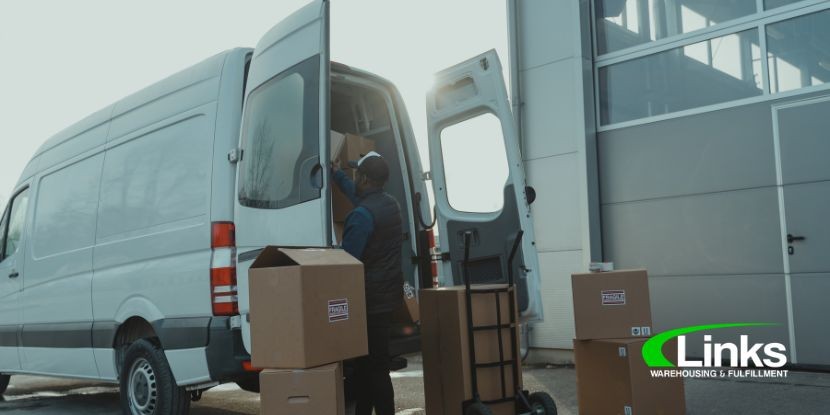
An ecommerce brand outgrows its fulfillment setup when order volume, inventory complexity, or customer expectations exceed what its current team and storage space can manage efficiently. The first signs are often delayed shipments, picking errors, overcrowded shelves, and employees spending more time packing orders than growing the business.
At Links Corp, we provide ecommerce fulfillment solutions for businesses that need more organized order processing and distribution. Understanding when to consider professional ecommerce fulfillment services and Canadian warehousing can help brands address operational problems before they affect customers.
What Are the First Signs You've Outgrown Your Setup?
A fulfillment operation may work well when a business processes a manageable number of daily orders. However, growth introduces challenges that aren't always solved by hiring another employee or adding more shelves.
Common warning signs include:
- Shipping delays: Orders take longer to pick, pack, and dispatch.
- Inventory discrepancies: Products appear available online but cannot be located.
- Packing errors: Customers receive incorrect items or quantities.
- Limited storage: New inventory competes with packing and shipping space.
- Seasonal bottlenecks: Promotions create order volumes the existing operation cannot handle.
An occasional busy day isn't necessarily a problem. Repeated disruptions indicate that the fulfillment process may need restructuring.
Why Does Fulfillment Become More Complicated as You Grow?
Order volume is only one factor. An ecommerce brand selling 50 identical products daily may have simpler requirements than one processing 30 orders containing multiple product variations.
As product ranges expand, businesses must manage additional stock locations, packaging requirements, returns, and shipping arrangements.
Manual inventory tracking becomes more difficult, especially when orders arrive through multiple sales channels. Without consistent processes, employees spend more time locating products and correcting mistakes.
What Changes When You Outsource Ecommerce Fulfillment?
Working with a 3PL warehousing and fulfillment provider changes how inventory and customer orders move through the business.
Instead of storing and packing everything internally, products are transferred to a warehouse where they can be received, organized, picked, packed, and prepared for shipping.
Depending on the arrangement, the process may include:
- Receiving inventory from suppliers.
- Recording products and storage locations.
- Processing incoming customer orders.
- Picking and packing the correct items.
- Preparing shipments and updating order information.
The goal is to create a repeatable process that can accommodate changing order volumes.
How Do You Know Whether Outsourcing Makes Financial Sense?
Compare more than the monthly warehouse bill. Your current fulfillment costs may include storage, labour, packaging, equipment, software, and time spent correcting errors.
Consider how those costs change as orders increase. Businesses should also evaluate service requirements, inventory visibility, shipping arrangements, and potential integration needs before choosing a provider.
Professional ecommerce fulfillment services may be worthwhile when outsourcing creates more predictable operations or frees internal resources for other business priorities.
Build a More Scalable Fulfillment Operation With Links Corp
Growth should create opportunities, not constant shipping problems. At Links Corp, we help ecommerce businesses explore warehousing and fulfillment arrangements that support their operational requirements.
Whether you're experiencing inventory challenges, shipping delays, or increasing order complexity, our team can discuss how ecommerce fulfillment could fit your business.
Contact Links Corp to review your current processes and explore available fulfillment solutions.