

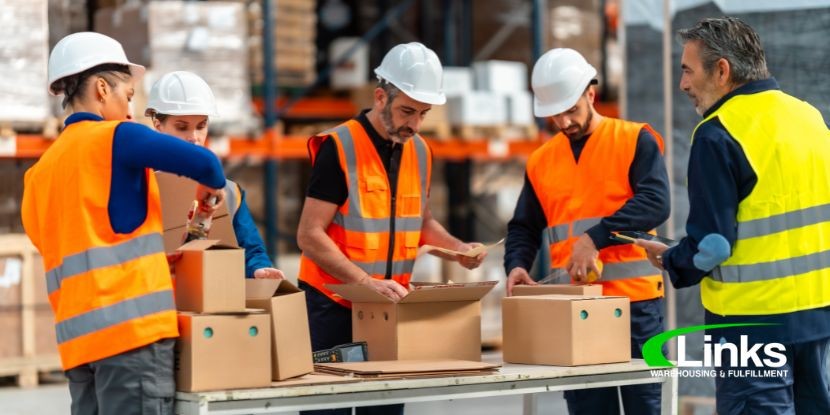
Reverse logistics in Canada recovers value by preventing every returned product from being treated as a total loss. Through organized ecommerce returns management, items are received, inspected, graded, and directed toward the most appropriate next step. Effective retail returns processing may allow suitable products to be restocked, repackaged, refurbished, used for parts, returned to a vendor, recycled, or disposed of properly. The goal is to recover usable inventory while keeping warehouse records accurate and following the brand's instructions.
For everything from returns and recalls to inventory management, Links Corp provides reliable and comprehensive Canadian warehousing services for businesses in Canada and looking to expand from the United States.
Returned Products Are Received
The process begins when a customer, retailer, or marketplace sends an item back. The warehouse records the return and connects it with available order, product, or authorization information.
This receiving step establishes what came back, when it arrived, and which account or order it belongs to. Without a controlled receiving process, products can sit unrecorded while inventory data becomes increasingly inaccurate.
Inspection to Determine the Product's Next Step
Not every returned item is in the same condition. One may be unopened and saleable, while another may have damaged packaging, missing components, signs of use, or a functional defect.
Inspection and grading give the warehouse a consistent basis for deciding what happens next. The process should follow instructions established by the brand, which may include condition categories, required tests, photographs, escalation rules, and disposition options.
Restocking and Refurbishment Recover Inventory
When a product meets the approved criteria, it may be returned to saleable inventory. Some items may require cleaning, testing, reboxing, relabelling, or minor refurbishment first.
This is where ecommerce returns management can directly recover value. Instead of leaving usable merchandise in a returns area or automatically disposing of it, the business identifies which products can re-enter inventory and generate another sale.
Products that cannot be sold as new may still have an approved alternative use. Depending on the brand's instructions, they may be classified as seconds, salvaged for components, consolidated for return to a vendor, or processed through another recovery channel.
Inventory Records That Reflect Each Decision
Physical processing and digital inventory updates need to match. Once an item is restocked, refurbished, quarantined, or removed from inventory, the warehouse management system should reflect that status.
Accurate updates help a brand understand available stock, return patterns, and how much inventory has been recovered. They also reduce the risk of making a returned product available for sale before it has passed the required inspection.
Disposal Is the Final Option, Not the Default
Some returned products cannot be resold, repaired, recycled, or returned to a vendor. In those cases, they should be handled through an appropriate disposal process based on the product and applicable requirements.
Our guide to streamlining reverse logistics with an ecommerce fulfilment team explains how defined policies, technology, inspection procedures, and communication support a more consistent workflow.
Manage Your Inventory with Links Corp
At Links Corp, we provide retail returns processing based on each client's evaluation and escalation instructions. Organized reverse logistics in Canada can help brands recover usable inventory, maintain more accurate records, control avoidable losses, and provide customers with a clearer post-purchase experience.