

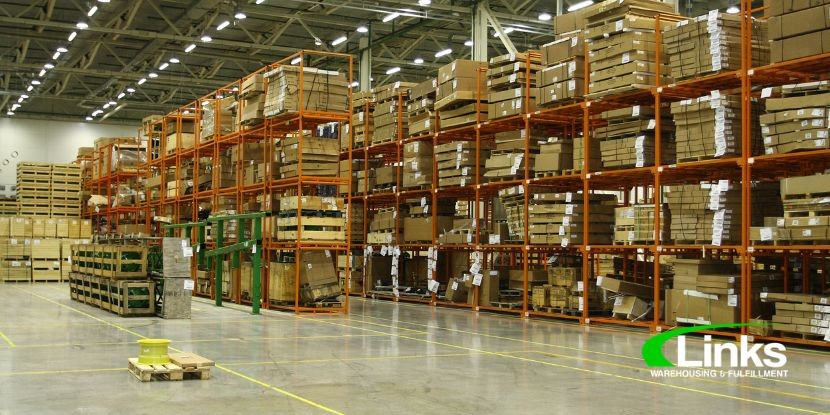
Canadian ecommerce fulfillment allows a U.S. brand to position inventory inside Canada and outsource the daily work of receiving, storing, picking, packing, shipping, and handling returns. Instead of sending every customer order across the border individually, the brand moves inventory to a Canadian facility in larger shipments. Canadian warehousing for ecommerce companies then provides the local inventory and operational infrastructure needed to serve Canadian customers without the brand opening and staffing its own warehouse.
At Links Corp, we manage the physical movement of inventory after it reaches our facility while giving clients access to information about their stock and orders.
Keep Your Inventory Positioned Inside Canada
The process begins with deciding which products and quantities should be stored in Canada. This decision may be based on order history, product demand, launch plans, promotions, and expected seasonal volume.
The U.S. brand arranges for inventory to enter Canada and reach the warehouse. Cross-border responsibilities, including the importer of record, customs documentation, duties, taxes, and brokerage, should be clarified before goods are shipped. Addressing these details in advance helps prevent inventory from being delayed before it reaches the fulfillment facility.
Once stock is positioned domestically, individual orders can be prepared and handed to carriers from inside Canada.
Incoming Inventory Is Received and Recorded
When a shipment arrives, the warehouse receives the products according to the agreed procedures. Items may be counted, checked against the shipment information, labelled, and assigned to storage locations.
Accurate receiving is important because the opening inventory record affects every order that follows. If quantities, product codes, or variants are entered incorrectly, the brand may see inaccurate stock levels or sell products that are not available.
Clear product identifiers, carton labels, packing lists, and advance shipment information can make receiving more efficient.
Sales Channels Send Orders to the Warehouse
The next step is connecting the brand's ecommerce platform or order transmission method to the fulfillment workflow. When a Canadian customer places an order, the relevant order details are transmitted to the warehouse.
Those details typically include:
- The products and quantities ordered
- The customer's shipping address
- The selected shipping method
- Any packaging or labelling instructions
- Relevant retailer or sales-channel requirements
Brands should test product codes, inventory synchronization, address data, and order routing before launch. This helps identify mismatched SKUs or missing information before live customer orders begin moving through the system.
Orders Are Picked, Packed, and Handed to a Carrier
Warehouse staff locate the ordered products, verify the items, and pack them according to the client's instructions. The order is then labelled and transferred to the appropriate parcel or freight carrier.
A well-defined pick-and-pack process matters because fulfillment affects the customer's perception of the brand. Incorrect items, unsuitable packaging, or delayed carrier handoffs can create support requests and avoidable returns.
Canadian ecommerce fulfillment gives a U.S. company a local operational process while allowing the brand to continue managing marketing, merchandising, and customer relationships from its home market.
Returns Re-enter the Inventory Workflow
A Canadian return address can simplify the experience for customers who would otherwise need to send products internationally. Returned items can be received, inspected, and processed according to the brand's instructions.
Depending on the condition and product category, an item may be returned to saleable inventory, cleaned, repackaged, refurbished, classified separately, sent back to the vendor, or prepared for appropriate disposal. Inventory records should then be updated so the brand knows what can be resold.
The Operation Can Scale Without an In-House Warehouse
Canadian ecommerce warehousing allows a brand to expand storage and fulfillment activity without leasing a facility, purchasing equipment, recruiting warehouse employees, or building its own warehouse management process.
For Shopify businesses, our guide to why Shopify sellers are choosing Canadian 3PL fulfillment partners explains how domestic inventory placement can support delivery, returns, and inventory control.
Take Your ECommerce Business to the Next Level with Canadian Warehousing
At Links Corp, we help U.S. brands build a practical Canadian distribution workflow around their products, order characteristics, sales channels, and expected volume. Contact us to discuss how inventory receiving, storage, order fulfillment, shipping, and returns can be organized for your Canadian customers.